
Law firm website development has higher stakes than most industries. Prospective clients often face stressful legal problems, compare several firms quickly and judge credibility from the website before calling. At the same time, lawyers must follow advertising and ethics rules. This guide covers what we build into law firm websites at Savoir Management. It is general information, not legal advice.
Why is your website the new first impression?
Most prospective clients research online before contacting a lawyer, even when referred. Your website is where they decide whether your firm understands their problem and seems trustworthy enough to call.
For local services, Google ranks results on relevance, distance and prominence, according to its local ranking tips. A strong website supports all three.
What core elements must every law firm website have?
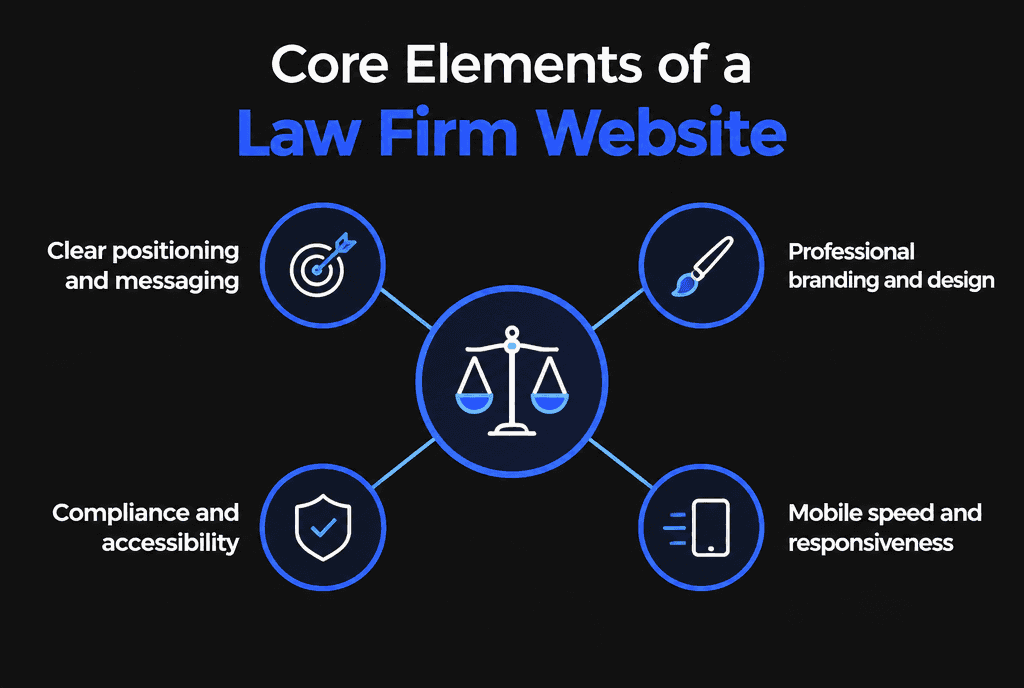
Practice area pages, attorney bios, a clear consultation path, office information, FAQs, required disclaimers and fast, accessible, secure pages. Each one answers a question clients ask before choosing a firm.
Practice area pages: one per service, explaining the process, timelines and common questions.
Attorney bios: education, bar admissions, experience and a professional photo.
Intake: phone, form and scheduling options, with a response-time promise.
Locations: address, hours and map for each office.
What advertising rules apply to law firm websites?
State attorney advertising rules apply to websites. Most are based on the ABA Model Rules, which prohibit false or misleading communications and regulate solicitation and specialization claims.
Review ABA Model Rule 7.1 and Rule 7.2, then check your state bar's version. Pay attention to case results, testimonials, "specialist" language and required disclaimers.
What mistakes do law firms make with their websites?
Generic pages that list practice areas without explanation, no clear way to book a consultation, slow mobile pages, outdated design, missing bios and claims that may conflict with advertising rules.
One "Practice Areas" page instead of a page per service
Contact forms that promise nothing about response time
Stock photos instead of real attorneys and offices
Missing disclaimers about attorney-client relationships
How do you turn a law firm website into a client-generating machine?
Answer real client questions on each practice page, make consultation booking easy on every page, show credibility through bios and permitted reviews, and track which pages and sources produce consultations.

Track calls and form submissions as conversions with Google Analytics recommended events.
How should law firms approach local SEO?
Build practice and location pages, keep your Google Business Profile complete and active, earn reviews, list the firm consistently across directories and add structured data for your offices.
Use LocalBusiness structured data for each office, and follow Google's SEO Starter Guide. Our local SEO web development guide goes deeper.
How should law firms handle security and accessibility?
Serve every page over HTTPS, keep intake forms minimal and secure, and build to WCAG so every potential client can use the site. Legal websites are frequent targets of accessibility demand letters.
Follow WCAG and the DOJ's web accessibility guidance. Read our guide to ADA-compliant web development.
How does strategic web development support long-term growth?
A well-structured site grows with the firm: new practice pages, new attorneys and new locations slot in cleanly, content builds authority over time and paid campaigns have strong landing pages to send traffic to.
Legal advertisers should also read our guide on how attorneys use Google Ads to land high-value clients.
Why work with Savoir Management?
We build fast, accessible law firm websites around practice-area content, local SEO and consultation intake, and we design with advertising rules in mind.

Our web development team builds law firm sites, and our Google Ads team drives consultations to them.


