
Web development for local SEO is the half of local search many businesses ignore. A strong Google Business Profile helps you appear in the map pack, but your website supplies much of the relevance and trust behind it. This guide explains the website elements that help local businesses rank, based on the local sites we build at Savoir Management.
How does local SEO work?
Google ranks local results mainly on three factors: relevance (how well you match the search), distance (how far you are from the searcher) and prominence (how well known and trusted you are). Your website influences relevance and prominence directly.
These factors come from Google's own tips to improve your local ranking. You cannot change distance, but you can make your site the clearest, most trustworthy answer for your services and area.
Which web development elements boost local SEO?
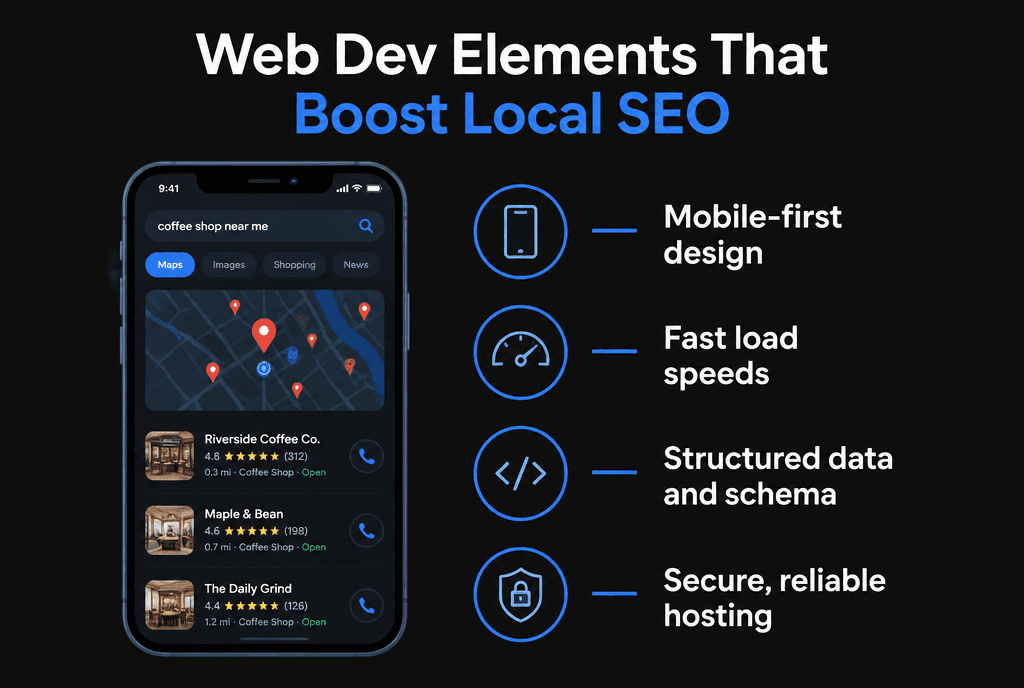
Mobile-first design, fast loading, structured data and secure, reliable hosting form the technical base. On top of that, service and location pages, consistent business details and local proof make the site relevant.
How should a local website be structured?
Create a dedicated page for each core service and, where you truly operate, each location. Link them from a clear navigation and from each other so Google sees the full map of what you offer and where.
Home: who you are, where you serve, primary call to action
Service pages: one per main service, with pricing guidance and FAQs
Location pages: real address or service-area details, local projects, reviews and directions
About and contact pages with consistent business details
Avoid near-duplicate city pages with only the town name changed; Google's spam policies treat those as doorway pages.
How does structured data help local businesses?
LocalBusiness structured data tells Google your business type, name, address, phone, hours and coordinates in a machine-readable format, reducing ambiguity about who and where you are.
Follow Google's LocalBusiness structured data guide and test pages with the Rich Results Test before launch.
Why do NAP consistency and Business Profile links matter?
Matching your name, address and phone number across the website, Google Business Profile and directories helps Google trust your details. Linking your profile to the right landing page sends local visitors to the most relevant page.
Follow Google's guidelines for representing your business: use your real business name, a real address or service area, and accurate categories.
How do mobile performance and speed affect local rankings?
Most local searches happen on phones, and Google indexes the mobile version of your site. Fast, mobile-friendly pages with click-to-call and directions turn local searches into visits.
Google uses mobile-first indexing, and Core Web Vitals targets include LCP within 2.5 seconds. Our site speed guide covers the fixes.

What local content helps a website rank?
Content that proves local experience ranks and converts: project case studies with neighborhoods named, local FAQs, team bios, community involvement and reviews from local customers.
Write for people, not keywords. Google's guidance on helpful, people-first content applies to local pages too.
What are the benefits of building for local SEO?
A locally optimized site brings steady, high-intent visitors from your area without paying per click, supports your map pack rankings and makes ads cheaper by improving landing page quality.

How does local SEO work with local ads?
SEO and ads reinforce each other. Ads give immediate visibility while organic rankings grow, and strong local landing pages improve ad Quality Score and conversion rates.
Read our guide to Google Ads for local businesses, and what to ask before hiring a local web developer.
How do you build a website for local SEO success?
Plan services and locations first, build fast mobile pages with structured data, keep business details consistent, connect your Business Profile and publish local proof regularly.
Our web development team works with our SEO team to build local sites that rank. See also our guide to SEO-optimized web development.