
Real estate website development decides whether your marketing produces conversations or just page views. Buyers and sellers start their search online, compare agents quickly and expect fast, mobile-friendly property search. This guide covers the features we build into agent and team websites at Savoir Management to turn visitors into clients.
Why does web development matter more than ever for agents?
Buyers browse listings and research agents online before reaching out, so your website is where they decide whether to contact you. Portals and brokerage sites share attention with competitors; your own site builds your brand and captures leads you own.

The National Association of Realtors tracks how buyers and sellers use online tools in its Profile of Home Buyers and Sellers and Real Estate in a Digital Age reports.
What features does a high-converting real estate website need?
IDX property search, neighborhood pages, home valuation and saved-search lead capture, agent bios with reviews, fast mobile pages and CRM integration. Each feature gives visitors a reason to come back and a reason to contact you.
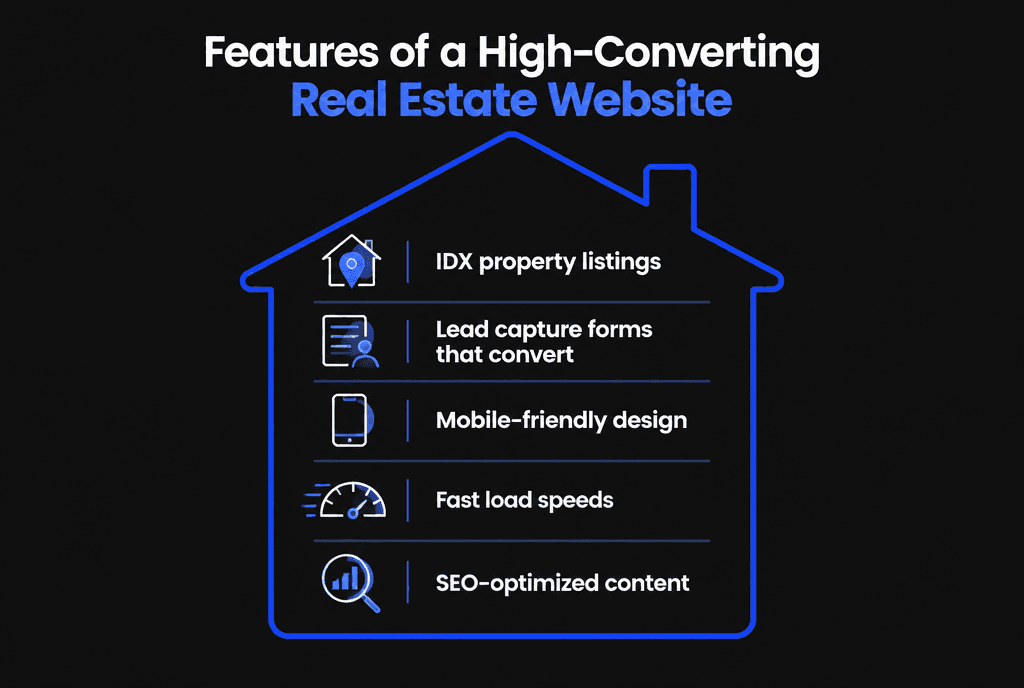
IDX search with filters, maps and saved searches
Neighborhood pages with schools, amenities, market data and listings
Seller tools: home valuation and market reports
Trust: bios, reviews, recent sales
Contact paths: showing requests, call and text buttons
How does web development help agents close more deals?
Fast follow-up wins deals. Connect every form to your CRM, send instant alerts and automated listing emails, and make it easy for leads to book showings and calls from any page.
Track leads with Google Analytics recommended events so you know which pages and sources produce clients. For booking features, see our guide to booking system website development.
How should agents approach local SEO?
Create detailed pages for each neighborhood and community you serve, keep your Google Business Profile complete, earn reviews and add structured data. Local pages help you rank for the areas where you want listings.
Google ranks local results on relevance, distance and prominence, according to its local ranking tips. Add LocalBusiness structured data and read our local SEO web development guide.
What role do analytics play in real estate web development?
Analytics show which neighborhoods, listings and lead magnets attract serious buyers and sellers, so you can invest in the pages and campaigns that produce closings.

What fair housing rules affect real estate websites?
The Fair Housing Act prohibits discrimination in housing, including advertising. Describe properties and amenities, not the type of person who should live there, and follow ad platform rules for housing categories.
Read HUD's Fair Housing Act overview. Ad platforms also restrict targeting for housing ads; our guide to Google Ads for real estate agents covers the details.
How do you keep listing pages fast?
Compress and resize property photos, lazy-load galleries below the fold and limit heavy scripts. Listing pages are image-heavy, so speed needs deliberate work.
Meet Core Web Vitals targets on mobile. Our site speed guide explains the fixes.
How do you stop losing deals to weak websites?
Replace a template with a site built around search, neighborhoods, lead capture and follow-up, then measure results monthly.

Our web development team builds real estate websites. To drive more buyers and sellers to it, read Google Ads for real estate agents.


